Story Structure; Writing the Novel
don’t you QUIT

You know every one of Miss Snark’s blog posts, you don’t care if she went dark years ago. In fact, you still believe she’s out there. Waiting to get you. You still troll Nathan Bransford’s Orange Goodness before you make a move and Query Tracker has lost it’s shine. It’s time for the credo.
Writing is hard. If the process was easy, we’d all be cranking out book deals.
Don’t You Quit.
When things go wrong, as they sometimes will,
When the road you’re trudging seems all uphill, When the funds are low and the debts are high, And you want to smile, but you have to sigh,
When care is pressing you down a bit-Rest if you must, but don’t you quit.

Life is queer with its twists and turns,
As every one of us sometimes learns,
And many a fellow turns about When he might have won had he stuck it out. Don’t give up though the pace seems slow -You may succeed with another blow.
Often the goal is nearer than
It seems to a faint and faltering man;

Often the struggler has given up When he might have captured the victor’s cup; And he learned too late when the night came down, How close he was to the golden crown.
Success is failure turned inside out –
The silver tint in the clouds of doubt, And you never can tell how close you are,

It might be near when it seems afar;
So stick to the fight when you’re hardest hit -It’s when things seem worst that you must not quit.
What’s it gonna be?

Persistence is the Game

P is for PERSISTENCE. If you want to get published, learn it. Memorize it. Embrace it.
Publishing is hard. The business rewards those who don’t give up.
Editors and agents will keep it real. Learn from what makes sense, discard what doesn’t. Don’t sell out your dream.
Realize you will be rejected more times than you ever thought possible. Mourn for a day and move on. Revenge query.
Structure will guide you like a headlight along a dark road. Don’t compromise on craft. Read good books.
Imagine yourself at the top, even when you feel like you can’t crawl out of the gutter of rejection. Imagine it. Be it.
Stay the course. If you need another round of edits, dive in. Don’t fight it. Keep editing and carry on.
The fact is, you’re looking for a marriage. You’re looking for the L word. You want that agent to adore your work.
Expect critique partners who help and respect you. Treat other writers as you would be treated.
Never give up. Never. Even when they say your baby’s ugly. Editing is plastic surgery be your own book doctor.
Care for yourself during submissions. Resist the urge to wallow. Buy little rejection gifts, treat yourself to manis/pedis.
Embrace the challenge to get published. Believe in your story. Look for the love in their eyes, even if it’s under every rock on the planet because publishing, more than talent rewards persistence

Make It Through The First Draft

Writing a novel can be overwhelming. If it’s your first, you may not think you can make it. This is a vulnerable time. Writing is not a sprint. It’s an endurance test. Whether you’re a planner or a panzter the process can play tricks on your mind. You agonize over the right word. You start to feel down on your story, your writing and yourself. This is toxic.

Shut down that inner critic. This is not the place to agonize, pick or poke the quality of your writing. Editors, agents and future drafts all await you. When you start to think, “Who am I? No one will want to read this.” or “It’s impossible to get published.”, you feed into a track of negative self-talk. Once you believe it, you’ll be tempted to stop. You will want to avoid writing or you’ll put it off for another day, when you feel like it.
Thing is, you’ll never feel like it if you can’t tamp down the demons. Writing is your job. You won’t wade through the ocean in a day, will you? Nor will you finish the novel by worrying the first draft isn’t good enough.
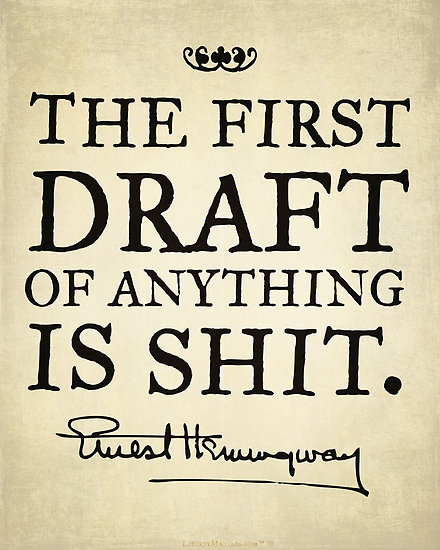
Guess what? It’s supposed to be bad. Just get the words down. Keep going, don’t think about submissions. That should be the furthest thing from your mind.
Try to float through insecurities, keep writing. If you can get to the next page and the next before you know you’re done with that first chapter. Once you’ve done one chapter you can do two, if you make it to the dreaded half way mark, keep going. Don’t talk about your work or your story. Keep the fires of creativity stoked with a need to get the plot on paper. Writers who talk about their work grow bored. Talk too much about the details and you’ll find enthusiasm waning just when you need that the most.
It you write your story linear, turn off the harsh inner critic and keep juicy details to yourself, the momentum will carry you through the worst first draft malaise your mind can ever dish up. You’ll have you’re first draft done, and hey your a novelist. Now you get to edit that sucker.
Lermontov A Hero in His Time and Ours

He lived nearly two hundred years ago. The novel Mikhail Lermontov left us sparkles as a portrait of the Byronic hero. Pechorin is bored, he’s sharp-tongued, calculating and a little desperate, nay impulsive. He’s sensitive, but self destructive too. A contradiction, the supreme anti-hero.

So what is this superfluous man? In Russia, it’s more than dandyism. The archetype was made popular by Turgenev in his novella, Diary of a Superfluous Man. He disregards societal norms, he’s cynical, unempathetic and enjoys rubbing others with his pursuits, the big three: gambling, dueling and romantic escapades. He’s not just a one-dimensional fop. He’s a symbol. An exponent of the Tsar Nicholas I’s reactionary policies. These men refused a useful life they didn’t believe in so they gave themselves over to a rakish passivity. The superfluous man is lost, he’s not riding the character arch to win the game. He’s thrown his hand in before he ever started. Much of this literary type can be traced to the peculiar socio-political climate of 19th century Russia. Russia didn’t have a renaissance or a reformation. Thus the history of it’s literature has always been a vehicle for social change before entertainment. Lermontov does both.

Hero for Our Time is set against the beauty of the Caucuses Mountains. The structure consists of five novellas with differing points of view. The most compelling scene depicts a duel. Dueling in Russia at this time was rife and deadly. Pushkin himself was killed in a duel. The government outlawed the practice but duelers always found a secret place and a way to carry on the duel, little caring they could face arrest if they were discovered.
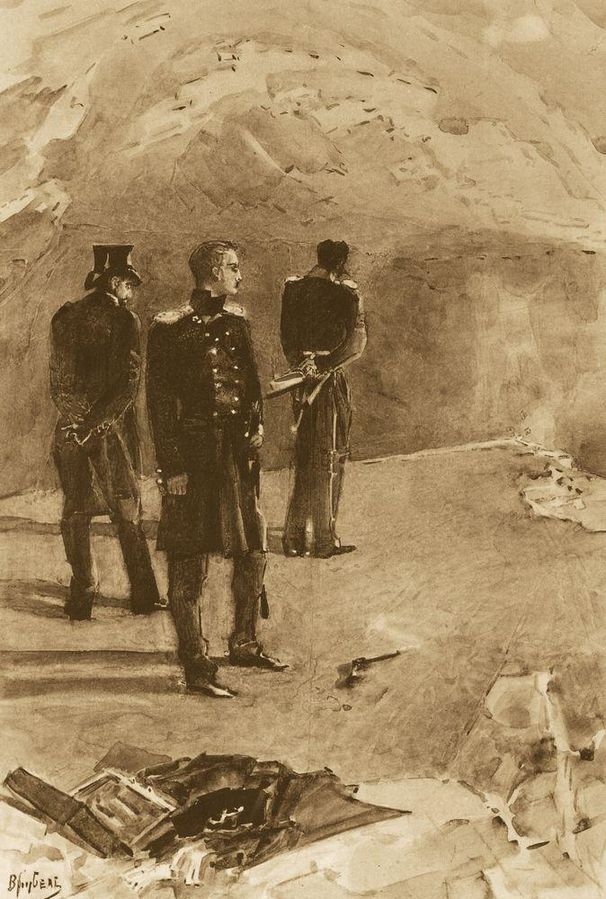
What makes Hero so vivid is the duel is set on a cliff. The idea is almost ridiculous, so over the top that it couldn’t be real. But that’s the point. Lermontov wanted to set his duel in a way that would be memorable.
Hemingway’s Style Surprisingly Relevent

They teach the greats in English class but nobody writes like that anymore. Fitzgerald? Too much doom and subtext. Chekhov? Roundabout and talky. Joyce? Who has the patience. Hemingway? Well, back up a bit. Hemingway was actually the father of modern literature. While others took chapters to warm up, explore characterization and slow-start their plots, Hemingway’s sparse make-every-word count style served as a bridge away from the rambling tomes that preceded him. He was the first to chop the unnecessary, to hone till he found his “one true sentence”. Today’s writers are closer to Hemingway, than Dickens. Here’s why.

What you didn’t say counted more. He was the master of the right word. He saw the power in the few. Unlike Proust who could writhe on the floor for hours pulling and pushing words from his brain, Hemingway’s short stories prepared him to get the most out of the smallest space. He turned away from overblown, dense styles like Melville and went to work as a newspaperman writing copy for the Kansas City Star. He learned to be succinct and to shoot for clarity. He adapted the Star Style and adhered to the guidelines without fail.
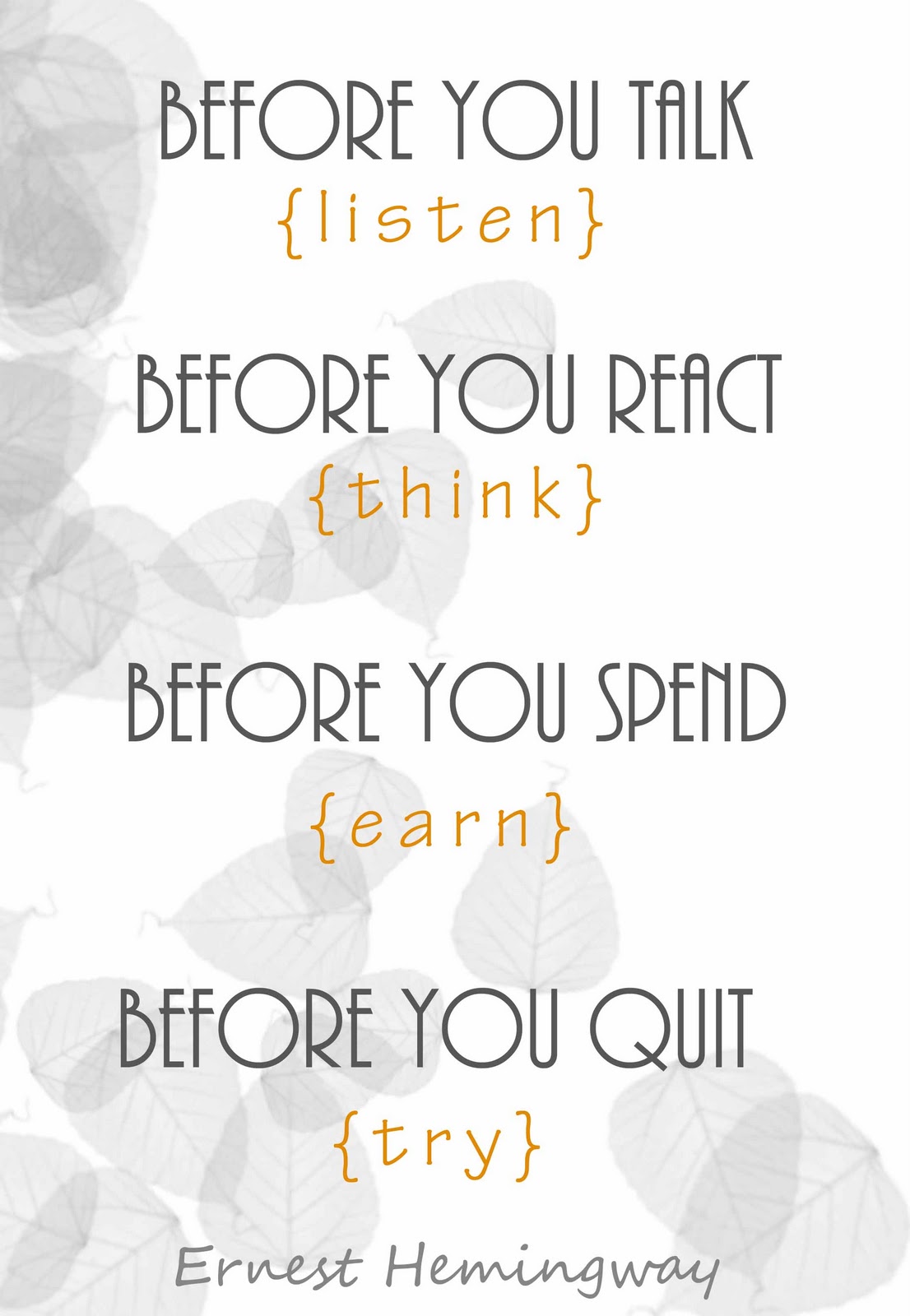
Hemingway’s Star Style, 1915
•Use short sentences. Use short first paragraphs. Use vigorous English. Be positive, not negative.
•Eliminate every superfluous word as “Funeral services will be at 2 o’clock Tuesday,” not “The funeral services will be held at the hour of 2 o’clock on Tuesday.” He said is better than he said in the course of conversation.
•Be careful of the word also. It usually modifies the word it follows closest. “He, also, went” means “He, too, went.” “He went also” means he went in addition to taking some other action.
•Don’t say “He had his leg cut off in an accident.” He wouldn’t have had it done for anything.
•”He suffered a broken leg in a fall,” not “he broke his leg in a fall.” He didn’t break the leg, the fall did. Say a leg, not his leg, because presumably the man has two legs.

That’s the house in Key West. I step into the little writing studio out back near the salt water pool. I’m told by the guides who give the tours that Hemingway and his wife, I think #3 had frequent fights over the pool. It was a pain to clean and haul the sea water in. I imagine as I walk the grounds, Papa strides to his studio at dawn, locks the world out until noon, heads into town over to Sloppy Joe’s for a few. I wonder at how he is able to live life to the fullest with his hard-drinking, womanizing reputation. And I know he heads to Bimini next for big game fishing, and the evening will end, perhaps 90 miles away at the Tropicana. I see him get up and do it all over again, with a massive hangover, knowing how his story will end, but focused on the now, while still cranking out the greatest novels ever written.
Then I look at the Star Style.
#1. Use short sentences.

Editing and Such

I’m eclectic. I don’t adhere to this way or that way blogging. Today is the letter E in the A to Z Blog Challenge and I don’t have a particular theme. That’s okay.

It’s who I am. At least as a blogger. I like history. I like art. I like culture and fashion. But when it comes to story structure and getting the edits and reedits done, there are no shortcuts. No magic wand, no a little of this and none of that. More like a lot of this and much more of that…and more…and more…and you may be asking how much more? Much More.
Writing is talent for sure, but endurance and sticking to the plan and cranking out the edits are where the writer will stand or fall. When people come to me about writing and ask questions I get excited. I love to inspire newbies with ideas. I listen and watch. I look for the glaze in their eyes when I talk structure. I look for scales falling as I tell them writing is hard and the easiest thing they can do for themselves is learn structure on the front-end.
If they slink away or enthusiasm dampens, I know they won’t make it. If your obsessive enough to stay the course, you’ll get there. Take editing. As new writers we think finishing the manuscript is the end-game, but it’s the first step. If you haven’t taken formal writing classes or workshops, you’ll quickly find that no matter how great your idea, the structure is off. So you begin the arduous task of editing your novel. You learn structure on the back-end.
Maybe you make the draft sparkle with successive passes. You get some guidance under your belt. Maybe you’ve joined a critique group (yeah!), and you’re CPer’s see the makings of a good story.

You’ll have to rewrite that novel, especially if you’re a panzter, over and over many times to get it right. It can be done. The old adage, put the first novel away in a drawer and write another is sound. IF you have no hope of revisiting the manuscript, grow bored with the story (it happens), or didn’t write the thing linear in the first place. But if you love you’re first novel, are committed to reworking it, rewriting it perhaps five or six times, experimenting with POV and flipping viewpoints, you can make that first novel shine. Guess what, it then becomes a third book, a fourth book and a fifth. Only if you study structure and approach each draft as a surgeon.
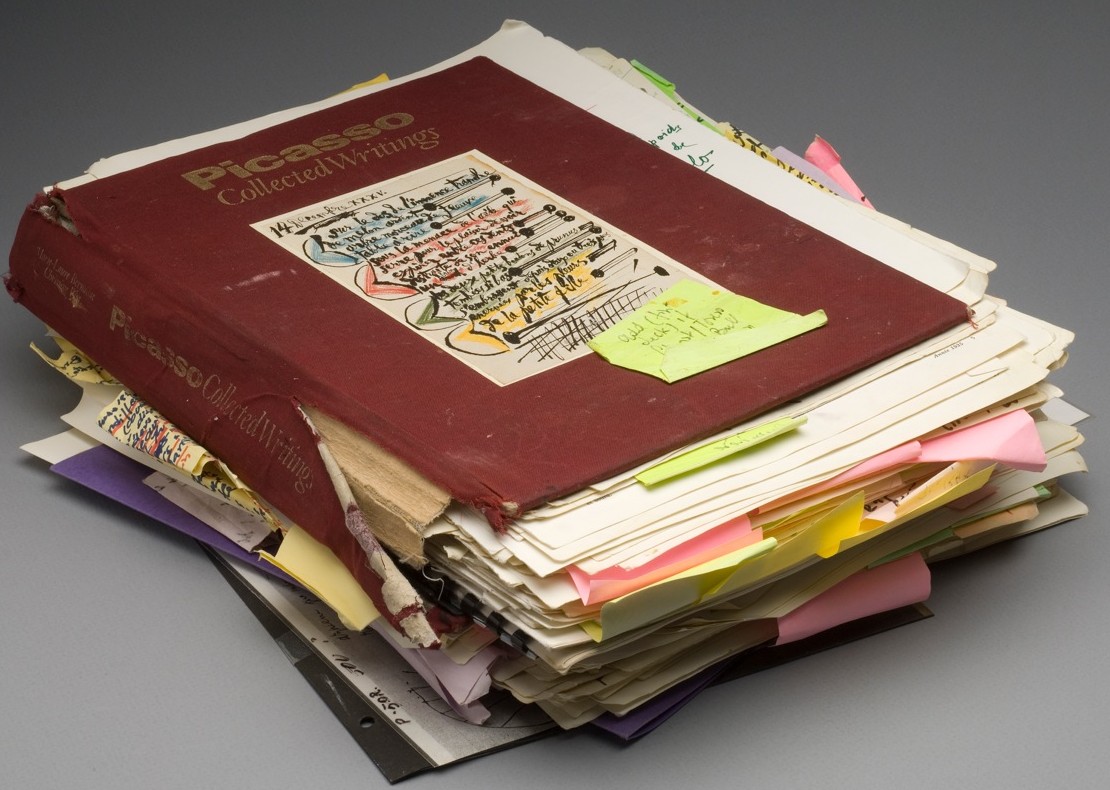
Resources on Structure
James Scott Bell’s Revision and Self-Editing is a great place to start. Plot and Structure is also a must. What I love about Bell is the ease with which he presents quick fixes and tips that anyone can overcome. The hurdles of learning structure and editing the novel become lighter. Much of what I learned about structure came through the editing process, and seeing what works. Bell’s challenge is the quickest, fast and dirty way to learning story structure that I know. I did it and it was a game-changer.
The Challenge
It’s not easy. Few will have the patience to do it. You might want to give up. Don’t, I promise it works.
Take 6 books you want to read that you admire. Look for a range of works. Ones you’ve read before are fine but read critically. First, read for pleasure. Note what works, what doesn’t. Read again, but this time, deconstruct each scene with an index card, again making note of what worked and what didn’t. You’ll be amazed at how fast you begin to get it. How quickly you apply these principles to others works, how critical you will become and how you will see the flaws in your own story. Now arrange all the index cards novel by novel. If that doesn’t infuse story structure in your mind, if you don’t see behind the curtain, you never will.

Hold Backstory back for a reason
As I look back on my journey as a writer, I am always amazed at one thing; we all seem to come imprinted with how to write a bad book. Writing is like any other skill. We crawl before we walk, we walk before we run, we run before we can cross the finish line. Now, just the shear will it takes, the passion and drive to actually get the thing done is a major accomplishment. Most people who dream of being a writer, and surveys tell us there are LOTS, will never get that far. Why? Writing is hard. Yup, so if you have stars in your eyes, good you’ll need them. You’ll also need to be a little crazy and obsessiveness doesn’t hurt either. Writing is not fun-though there are moments of intense joy. But most of the time, life has a way of interrupting and if you heed the call despite all the distractions and negative self-talk, and get your first draft done, pat your self on the back!

But don’t submit that manuscript. Resist the challenge to think of your work as done. It’s only just begun. If you’re new to this thing called writing, craft will help fight your way out of the bad book. I recently took part in a national writing contest, and after results were posted, I was stunned to read how many new writers had submitted a first draft they barely edited or a NANOWRIMO project still being fleshed out from November. Let’s admit it. It’s exciting to finish a project, especially if this is your first novel-you might feel as if you’ve climbed a mountain, but I’m here to tell you, you’re only at Base Camp 1. The summit is still a long way off. So polish first, edit and re-edit till you can’t stand your story. If you can afford an editor, do it. Don’t have a writer’s group? You’re not serious.

I started writing novels at 16. Like most newbie’s learning and feeling my way, they were rambling and had no structure, (and were probably much more fun to write in my blissful ignorance). I loaded them first with Backstory. I had paragraph after paragraph of the protag’s physical description, and details of ball gowns and complex family trees because I thought it was my job to educate Reader. Throw as much in the opening that I could so no one would be in the dark-in short I stripped the story of any magic and took out a reason to turn the page. I agonized (for years) about what to show, what scene should be in, I wanted every little step the character took to be mapped out. I wanted a blow by blow and a play book for the Reader.

BACKSTORY = Anything in your character’s remote past or childhood. There are times when this is germane to the story, your job and your skill is to weave it in such a way Reader won’t feel drenched in sriracha sauce. Backstory is like a spice, too much, and we become bored. It needs to be dosed in just the right amount, like breadcrumbs or your writing will fail before it’s even out of the gate. But don’t add too little either, or we won’t know what the heck is going on. When you start your story, resist the urge to lay an infodump or tell everything that is in your head about the protag’s history. Do this experiment. It’s going to feel weird, you might even feel clammy and shaky, you won’t believe what I’m saying, but HOLD back. Writing coaches tell us that too much Backstory in the beginning is our way of “warming up” our story in our minds. Backstory when dumped at the beginning, pages and pages of it, is self-serving and adds no benefit, so that’s why we all crawl at the same pace when we learn to write. We think we need to hand the Reader a snapshot because poor Reader is incapable of putting pieces together. When in reality the opposite is true. Reader needs very little to go on. Imagination can do the job just fine.
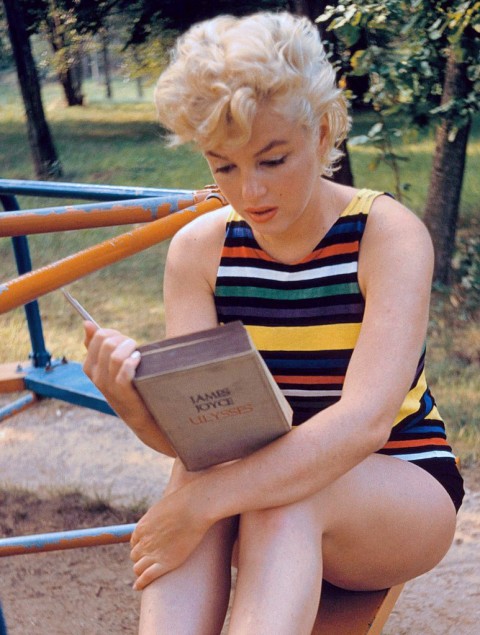
Think of it like this; someone you’ve only spoken with on the phone. You may know her basic stats, blue eyes, red hair and voice, yet your mind will create a picture and when you meet, you will be shocked because she doesn’t look like what you pictured. When you unleash your story on the wold, if you’ve done backstory and character description right, Reader will form his/her own mental picture even though you’ve given them very little to go on. So don’t tell everything upfront. If you still feel you must, write away but cut off the first three chapters. Your writing will sail much more smoothly.

My writing improved markedly when I started trusting Reader. I didn’t need to show every step the character took to get from point A to point B. I knew Reader could fill in the blanks and that was what made the difference in my writing. Trust Reader and you’ll never go wrong. So keep the Backstory back where it belongs.

- ← Previous
- 1
- 2
 jmledwellwrites